Millions of lines of COBOL still power payroll systems, bank transactions, and government records every day, yet the organizations running them face a pressing challenge: how do you replace something that critical without breaking what already works? That tension defines legacy modernization, and it explains why so many IT leaders are approaching COBOL replacement with structured, phased strategies rather than risky full rewrites. Application Modernization Tools have become central to this shift, helping teams analyze existing codebases, prioritize what to migrate first, and reduce the disruption that typically derails these projects.
Moving fast is rarely the right instinct when core business logic is on the line. A sound replacement strategy preserves what works, eliminates mainframe dependencies in manageable stages, and produces systems that modern teams can actually maintain. Organizations looking to execute that kind of disciplined transition can explore what CodeGiant brings to the process through its enterprise AI platform.
Table of Contents
- What Is COBOL Replacement and Why Does It Matter for Enterprises?
- When Should Enterprise Teams Consider COBOL Replacement?
- Can AI Automate COBOL Replacement?
- 7 COBOL Replacement Strategies for Enterprise IT Teams
- How to Choose the Right COBOL Replacement Approach
- How CodeGiant Supports Enterprise COBOL Replacement
- Try CodeGiant's Enterprise AI Platform Today
Summary
- COBOL remains deeply embedded in global commerce at a scale that makes replacement both urgent and complex. According to IBM Think's research, 95% of ATM transactions and 80% of in-person transactions still rely on COBOL systems, while 800 billion lines of COBOL code remain in active use worldwide. These are not dormant systems waiting to be decommissioned. They are live production environments handling trillions of dollars in daily transactions.
- The most dangerous signal that replacement is overdue is not system age but knowledge concentration. The July 2025 GAO report (GAO-25-107795) identified 11 critical legacy systems most in need of modernization across 10 agencies; eight of those systems still use outdated languages such as COBOL and Assembly, languages with a steadily shrinking pool of skilled maintainers..When fewer than three people in an organization can explain why a core system behaves the way it does under edge conditions, a single regulatory change or integration request can expose the entire operation to uncontrolled risk.
- AI tools can automate roughly 80% of COBOL code conversion according to IBM Newsroom, but the remaining 20% requires significant human expertise because that is where undocumented business logic, regulatory exceptions, and edge-case handling actually live. The automotive manufacturer case in the article illustrates this clearly: AI compressed a six-week, three-person module analysis to two weeks, projecting 60,000 person-days in savings across the full estate, but human engineers remained essential throughout.
- Migration outcomes improve substantially when AI produces a detailed dependency map before moving any code. U.S. insurer Unum was initially quoted seven years and $25 million for a full mainframe exit, but after using AI to ingest and map 1.5 million lines of COBOL in hours, the same modernization program is now projected to deliver $20 million in benefits within five years. The difference was not speed alone. It was the quality of the dependency analysis that reduced mid-migration surprises.
- Successfully converted code that lacks reasoning context creates its own form of technical debt. When developers cannot trace why a billing rule branches a particular way or which regulatory event caused a specific exception handler to exist, they inherit modern code with the same opacity as the COBOL it replaced. Line-level logic extraction, which pulls calculation branches and underwriting rules into auditable, structured form, addresses this by creating an inspectable record of what the system actually does rather than just what it was rewritten to do.
- Sequencing matters more than speed in regulated environments. Organizations that treat COBOL replacement as system-level engineering rather than language translation consistently achieve better outcomes, preserving transaction integrity, security controls, and integration points while incrementally replacing the underlying architecture. The Japanese regional bank case in the article demonstrates this: 2.4 million lines migrated in 14 months, release cycles reduced from 14 weeks to five days, and zero production incidents tied to the migration.
- CodeGiant's enterprise AI platform addresses the governance gap that typically appears after go-live by keeping logic extraction, dependency resolution, and human review structured, traceable, and embedded in the conversion pipeline, rather than treating them as separate one-time activities.
What Is COBOL Replacement and Why Does It Matter for Enterprises?
COBOL replacement is an operational necessity for enterprises whose core systems run on aging mainframe code while business demands real-time integration, cloud scalability, and a maintainable talent pool. This isn't a theoretical concern — it's a strategic imperative that directly impacts an organization's ability to compete, adapt, and grow.
💡 Definition: COBOL replacement refers to the process of migrating or rewriting legacy Common Business-Oriented Language systems into modern, cloud-compatible architectures — preserving critical business logic while eliminating the risks of outdated infrastructure.
"COBOL replacement is no longer a question of if — it's a question of when, and enterprises that delay face compounding technical debt, talent shortages, and integration failures." — Industry Consensus
Driver |
What It Means for Enterprises |
|---|---|
Real-Time Integration |
Legacy COBOL cannot natively connect with modern APIs and microservices |
Cloud Scalability |
Mainframe infrastructure is expensive and difficult to scale elastically |
Talent Pool |
The average COBOL developer is over 55 years old, creating a looming skills gap |
Regulatory Compliance |
Modern compliance frameworks demand auditability and agility that COBOL systems struggle to provide |

The scale is concrete: according to CROZ's COBOL Modernization analysis, there are 800 billion lines of COBOL code in active use worldwide, and InterSoft Associates reports that COBOL processes over $3 trillion in daily commerce. These live production systems carry real financial weight and grow harder to change without triggering downstream failures.
⚠️ Warning: Every delayed COBOL modernization decision increases the risk of cascading system failures. A single change to one module can trigger unpredictable breakages across interconnected legacy processes.
🔑 Takeaway: With $3 trillion in daily transactions flowing through COBOL systems, the cost of inaction is a direct business risk that grows more severe with each passing year.
What breaks first when enterprises delay COBOL replacement?
The failure point arrives when a regulatory change or new integration request reveals that critical logic lives inside a 40-year-old batch job with no documentation and one retired engineer who understood it. COBOL replacement moves this logic into modern languages and architectures—refactoring into Java or C#, composing functions as APIs, migrating to cloud infrastructure, or selectively rewriting modules while preserving underlying business rules. The goal is to make what works accessible, maintainable, and scalable.
Most teams fix problems at the edges with middleware layers, expensive contractors, or by avoiding fragile modules. This works temporarily, but as integration demands and compliance requirements grow, workarounds accumulate into a second system of risk. Our enterprise AI platform analyzes existing COBOL codebases, identifies the highest-risk or highest-value modules, and executes modernization step by step without full rewrites or loss of enterprise controls.
How does sequencing determine whether COBOL replacement succeeds or fails?
The critical difference between successful and reckless COBOL replacement is the order in which you proceed. Successful migrations treat the effort as system-level engineering, not language translation. They preserve transaction integrity, data access patterns, security controls, and integration points while replacing the underlying infrastructure. The business logic built over decades is valuable; the architecture it runs on is the problem. The right approach can separate the two.
Related Reading
- Application Modernization Tools
- What Is Application Modernization
- How To Modernize Legacy Systems
- Build Internal Tools
- Cobol Modernization
- Mainframe To Cloud Migration
- Legacy Software Modernization
- Cobol To Java
- Technical Debt Management
- Ai GovernanceLegacy System Modernization
When Should Enterprise Teams Consider COBOL Replacement?
Deciding when to replace COBOL is a risk management calculation: the window to make a thoughtful decision closes faster than most leadership teams expect.
"The window to make a thoughtful COBOL replacement decision closes faster than most leadership teams expect, and waiting too long transforms a strategic choice into a crisis response."
🚨 Warning: Delaying COBOL replacement planning is not a neutral decision. Every quarter of inaction compounds technical risk and narrows your options.
💡 Key Insight: Treat COBOL modernization as a risk management calculation, not a technology upgrade. The cost of waiting almost always exceeds the cost of acting.

Signal |
What It Means |
|---|---|
Talent shortage |
Fewer COBOL developers available each year |
Integration friction |
Legacy systems blocking modern API connectivity |
Audit & compliance gaps |
Aging codebases creating regulatory exposure |
Rising maintenance costs |
Operational spend outpacing business value |
When knowledge concentration becomes a single point of failure
The clearest signal is when fewer than three people can explain why a core system behaves the way it does—not how to operate it, but why it does what it does under edge conditions. This distinction matters when a regulatory deadline arrives, or a product change touches an undocumented rule buried in a batch job written in 1987. The July 2025 GAO report (GAO-25-107795) identified 11 critical legacy systems most in need of modernization across 10 agencies; eight still use outdated languages such as COBOL and Assembly, which have a steadily shrinking pool of skilled maintainers.
When budget allocation reveals a structural trap
A pattern repeatedly emerges in financial services, insurance, and government: maintenance spending crowds out transformation until no room remains to move. Teams that spend most of their IT budget keeping existing systems operational aren't being careful with money—they are paying a growing penalty for a deferred choice. The longer money stays allocated that way, the harder it becomes to fund the skills, tools, and parallel testing setup that responsible migration requires.
How does incremental COBOL replacement work within a constrained budget?
Most teams respond by running modernization as a separate effort alongside production operations, which stretches timelines and increases integration failure risk. Platforms like CodeGiant are built for this constraint, letting teams build new APIs, automations, and production-grade applications directly on top of existing infrastructure rather than beside it. This preserves compliance controls and transaction integrity while replacement work progresses incrementally, the only realistic path for organizations that cannot afford a full production freeze.
When security gaps cannot be patched without structural change
An Atlanta Fed working paper shows that states running COBOL-based UI-benefit systems experienced a 2.8-percentage-point larger decline in credit and debit card consumption compared to states with modern systems during the March–December 2020 period. The same analysis links those processing delays to at least a $40 billion reduction in real GDP (2019 dollars). People claiming benefits faced wait times exceeding 70 days because the systems couldn't handle the surge in volume and the rapid rule changes required by emergency legislation. Enterprise teams that delay replacement discover the true cost only after damage occurs.
Why does COBOL replacement become a fiduciary issue, not just a technical one?
The failure point is usually about how the system is built, not how it is run. A security team can add controls at the edge and strengthen access rules, but if the underlying COBOL environment runs on unsupported hardware or uses data structures incompatible with modern encryption standards, surface-level fixes don't close the real risk.
IBM Think's analysis of COBOL's continued role in global commerce makes the stakes clear: systems processing trillions in daily transactions with unfixable problems are not just a technology problem. They are a financial one. Audit findings, rising cyber-insurance premiums, and the inability to meet zero-trust requirements signal a structural condition that patching cannot fix.
What is the real cost of delaying COBOL replacement for another 18 months?
The right question enterprise teams should ask is not "Can we afford to replace this?" but "What is the cost of the next 18 months if we do not?" That reframe shifts the conversation from capital expenditure to risk exposure and often produces a different answer from the CFO. What happens next is where the conversation takes an unexpected turn.
Can AI Automate COBOL Replacement?
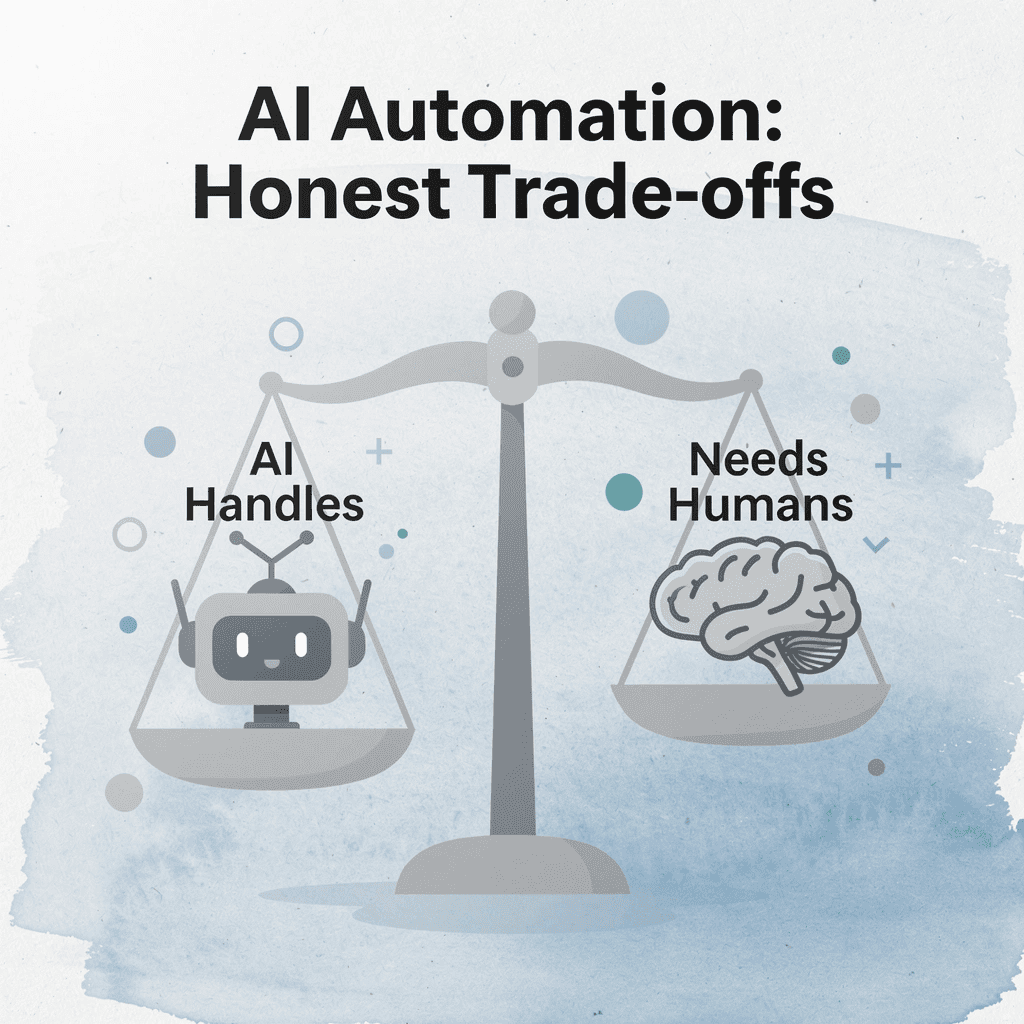
AI can handle much of COBOL replacement work, but the word "automate" needs a more honest definition than most vendors offer. According to IBM Newsroom, AI code translation tools can handle roughly 80% of code conversion automatically, but the remaining 20% demands significant human expertise. That 20% is exactly where the real institutional knowledge lives.
"AI code translation tools can handle roughly 80% of code conversion automatically, but the remaining 20% demands significant human expertise — and that 20% is where the real institutional knowledge lives." — IBM Newsroom
Conversion Phase |
AI Capability |
Human Involvement Required |
|---|---|---|
Standard code translation |
~80% automated |
Minimal — review and validation |
Complex business logic |
Partial assistance |
High — deep domain expertise |
Institutional knowledge layer |
Cannot automate |
Critical — irreplaceable |
🎯 Key Point: When vendors promise full COBOL automation, ask them directly about the 20% gap — that's where most modernization projects stall or fail.
⚠️ Warning: Treating AI-assisted migration as truly "automated" is one of the most costly misconceptions in legacy modernization. The 80% figure sounds impressive until you realize the remaining 20% can account for most of your project risk, time, and budget.
Where AI actually changes the math
The main problem in modernizing old systems was never the amount of code: it was the human time needed to understand undocumented code. AI systems that combine syntax tree analysis with generative models trained on large code collections can do that reverse-engineering work much faster, cutting timelines from weeks to hours. Instead of starting from scratch, you get a reliable description of what the code does. A major car manufacturer demonstrated this approach: a task that required two engineers and an expert for six weeks on a single 10,000-line section took only two weeks using an AI platform that pairs abstract syntax trees with retrieval-augmented generation. The company projects saving around 60,000 person-days across all legacy systems.
Why does COBOL replacement still depend on human expertise?
AI usually fails because it doesn't understand what something is supposed to do, not because of grammar mistakes. Business rules built into old COBOL code over decades reflect decisions about regulations, exceptions for certain products, and special cases that were never written down except in the code itself. A Japanese regional bank with 4 million lines of COBOL used three specialized AI agents to help with documentation, architecture, and cleanup, but kept eight engineers to oversee the work. The result: 2.4 million lines of code moved to new systems in 14 months, release cycles dropped from 14 weeks to five days, and zero production problems occurred. The AI accelerated the work; the engineers ensured everything retained its intended meaning.
How does embedding human review into the pipeline change COBOL replacement outcomes?
Most teams assign experienced COBOL developers to review AI output line by line, creating a bottleneck as migration scope grows. The specialists needed most spend time checking output instead of making decisions. Platforms like CodeGiant build human review directly into the pipeline: structured, traceable, and governed, rather than adding it as an afterthought.
What the numbers reveal about risk
AI-assisted COBOL migration measurably reduces risk compared to traditional approaches. U.S. insurer Unum was quoted seven years and $25 million by a consulting firm for a full mainframe exit. Using an AI-powered analysis service to map 1.5 million lines of COBOL in hours—revealing hidden interdependencies invisible to manual review—the modernization program is now projected to deliver $20 million in benefits within five years. The quality of the dependency map AI produces before migration begins is critical: when you know exactly what connects to what, the risk of breaking something in production drops sharply because you no longer discover dependencies mid-migration.
How does functional equivalence shape COBOL replacement outcomes?
Functional equivalence is the metric that matters most in regulated industries. Evidence across banking, insurance, and manufacturing shows AI-grounded migrations achieving equivalence above 90% when the analysis phase is thorough. Human experts then push higher through parallel testing, where the new system runs alongside the original for weeks before cutover. AI-generated specifications, automated equivalence testing, and structured human review transform what was once a high-stakes gamble into a managed, step-by-step process.
Does COBOL replacement preserve institutional knowledge for future teams?
What often goes unexamined is whether the institutional knowledge captured during migration survives in a usable form for future teams.
Related Reading
- As400 Modernization
- Enterprise Ai Governance
- Public Sector Digital Transformation
- Mendix Alternatives
- Appian Alternatives
- Ai Agent Pricing
- Outsystems Alternatives
- Appian Pricing
- OutSystems Vs Mendix
7 COBOL Replacement Strategies for Enterprise IT Teams
Replacing COBOL requires carefully matching the strategy to application complexity, business criticality, integration requirements, modernization goals, and change tolerance. The right approach preserves essential business behavior while moving toward a more maintainable technology foundation — directly addressing infrastructure pressure, skills shortages, and business-change needs.
"The right COBOL replacement strategy preserves essential business behavior while moving toward a more maintainable technology foundation — balancing modernization goals against real-world change tolerance." — Enterprise IT Modernization Principle
Decision Factor |
Why It Matters |
|---|---|
Application Complexity |
Determines feasibility of automated vs. manual migration |
Business Criticality |
Dictates acceptable risk levels and rollback requirements |
Integration Requirements |
Shapes interoperability and API strategy |
Modernization Goals |
Aligns technical choices with long-term architecture vision |
Change Tolerance |
Sets the pace and scope of transformation |
🎯 Key Point: No single COBOL replacement strategy fits every enterprise. Matching the approach to your specific constraints is the difference between a successful migration and a costly failure.
⚠️ Warning: Prioritizing speed over business behavior preservation is the most common mistake in COBOL modernization — and the one most likely to introduce critical production defects.
1. Rehost the Workload Without Changing Code
Rehosting moves the existing COBOL application and its runtime onto new infrastructure—cloud emulators, x86 servers, or managed mainframe-as-a-service platforms—without changing the source code. Teams gain immediate relief from data-center exit deadlines or rising hardware costs, completing the move in months rather than years. The application's functionality remains unchanged, requiring only minor middleware adjustments for data access or scheduling. Because COBOL talent requirements persist, rehosting works best as a short-term solution that creates space for deeper modernization later.
2. Replatform to a Modern Runtime Environment
Replatforming retains most COBOL application logic while replacing the underlying operating system, database, or transaction manager with a modern equivalent such as Linux, a relational database, or a cloud-managed runtime. The change reduces licensing fees tied to legacy mainframe capacity and improves elasticity without a complete rewrite. Minor code adjustments accommodate new data-access methods or job-control syntax, while core business rules remain unchanged. This approach suits systems with sound logic but unsustainable platform costs or skills constraints.
3. Refactor and Translate the Codebase
Refactoring converts COBOL source into a modern language such as Java, C#, or Python while preserving the original business behavior. Automated translation tools extract data divisions, control-flow graphs, and embedded rules, then generate code that is easier to maintain and follows the target language's style. The resulting application can leverage microservices, containers, and modern DevOps pipelines. Though testing requires more effort than rehosting, the benefit is permanent independence from COBOL and access to a larger pool of skilled workers.
4. Replace Selected Functions with Packaged or SaaS Solutions
Replacement retires parts of the COBOL system and replaces it with industry-standard packages or SaaS platforms that already contain the same business processes, such as core banking modules, claims engines, or ERP components. This strategy works well for standard functions where custom logic adds no competitive advantage. Data migration and process-alignment workshops become the main work streams, and the organization gains ongoing vendor maintenance and feature updates. Custom features requiring differentiation remain outside the package boundary.
5. Encapsulate Legacy Logic Behind Modern APIs
Encapsulation wraps existing COBOL programs with REST or event-driven APIs, allowing new digital channels, microservices, and partner systems to use the logic without direct mainframe access. The original code continues to run while modern developers interact only with the published interfaces. This non-invasive pattern enables the Strangler Fig approach: traffic is gradually redirected to newly built replacements until the legacy component can be retired. Risk remains low because the proven COBOL path stays available as a fallback throughout the transition.
6. Retire Obsolete Components and Retain Only What Still Adds Value
Not every COBOL module deserves modernization. Discovery tools map call graphs, data lineages, and production usage to identify dead code, duplicated functions, and systems whose business purpose has vanished. Teams can safely shut down these components after clearing data-retention and compliance obligations. Stable, low-change workloads that meet cost and risk thresholds can remain under disciplined maintenance. This concentrates investment on applications that drive revenue or regulatory compliance.
7. Accelerate Replacement with AI-Assisted Conversion and Hybrid Patterns
AI-driven pipelines analyze millions of lines of COBOL, extract business rules, and generate target-language code with equivalence test suites that verify identical outputs against production traces. Teams combine this automation with the Strangler Fig pattern, moving high-risk modules first while lower-risk batch jobs follow later. Platforms such as CodeGiant convert legacy logic into modern Java or JavaScript services, then deploy results into cloud or on-premises environments with deterministic execution and full audit trails. This hybrid model shortens timelines, reduces the COBOL skills bottleneck, and keeps production risk under continuous control.
How to Choose the Right COBOL Replacement Approach
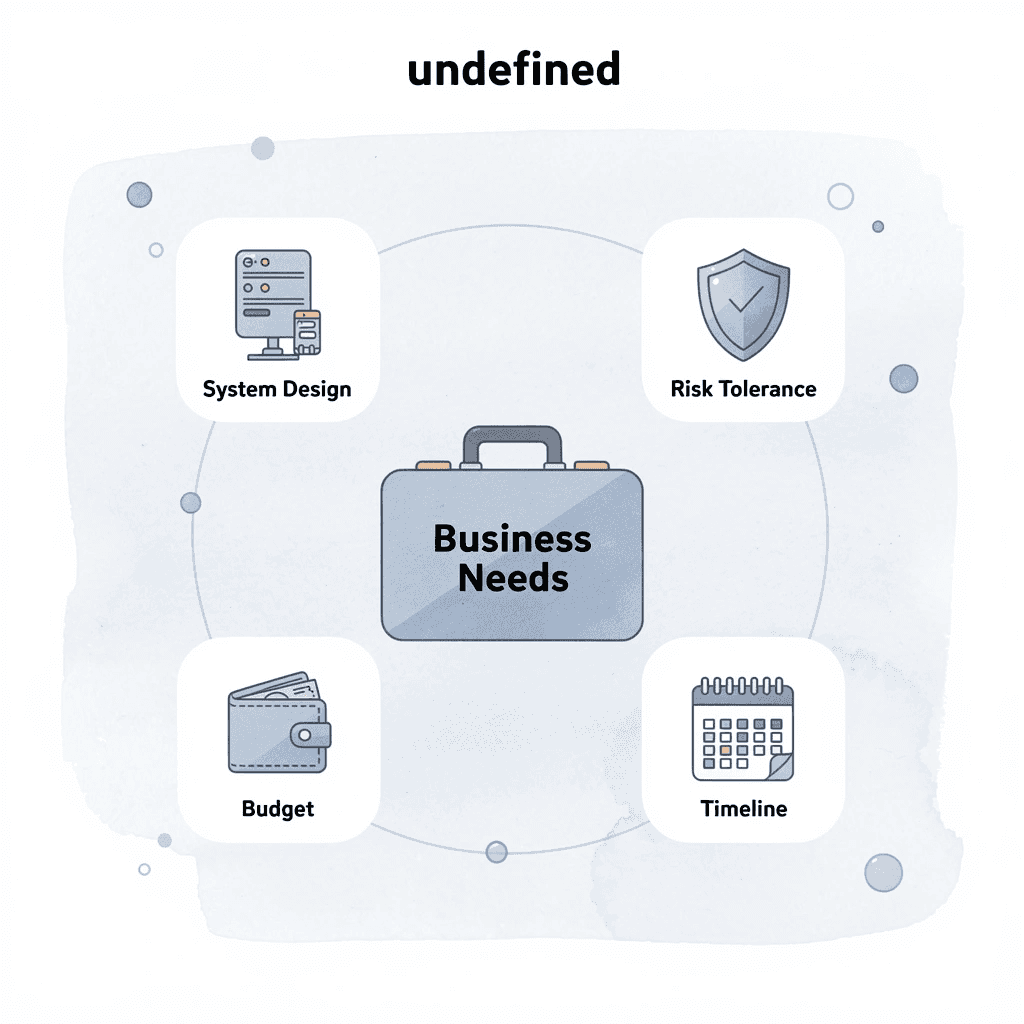
Picking the right COBOL replacement path means carefully matching what your business needs, how your systems work, risk tolerance, budget, and timeline to modernization strategies that have proven to work before.
"The right modernization approach isn't one-size-fits-all — it's the one that aligns your technical constraints, organizational risk tolerance, and business goals into a single, executable strategy."
Decision Factor |
Why It Matters |
Key Consideration |
|---|---|---|
Business Needs |
Drives the scope and priority of replacement |
What must be preserved vs. rebuilt? |
System Complexity |
Determines feasibility of each approach |
How tightly coupled are your COBOL dependencies? |
Risk Tolerance |
Shapes how aggressively you can modernize |
Can you afford downtime or phased rollouts? |
Budget |
Sets hard limits on strategy options |
Full rewrite vs. incremental migration costs |
Timeline |
Influences build-vs-buy decisions |
How urgent is the modernization need? |
🎯 Key Point: There is no universal COBOL replacement strategy — the right path is always the one that fits your organization's unique constraints and operational realities.
⚠️ Warning: Choosing a modernization approach based on cost alone — without accounting for system complexity or risk tolerance — is one of the most common and most costly mistakes organizations make.
Clarify Business Objectives and What Must Be Preserved
Organizations succeed by defining primary outcomes: lower infrastructure spend, reduced reliance on scarce COBOL skills, faster delivery of new capabilities, better cloud or AI integration, regulatory compliance, or process redesign. Decide early whether core business rules and data behaviors must remain unchanged or whether processes can evolve. Systems with stable logic favor lower-disruption options; those with outdated workflows justify higher-effort redesign. Document dependencies, change history, available test data, and knowledge held by remaining experts before committing to a technical choice.
Rehosting Moves Workloads with Minimal Code Change
Rehosting (lift-and-shift) moves COBOL applications onto emulators, Linux, Windows, or cloud-hosted mainframe environments with minimal changes. It addresses aging hardware, data-center exits, and capacity limits quickly at relatively lower cost and risk while preserving existing behavior. However, it does not eliminate the need for COBOL skills or resolve architectural debt, making it best suited as a short- to medium-term solution when infrastructure pressure is the primary concern and business logic remains sound. Post-migration, you must still optimize operations and monitoring.
Replatforming Adjusts the Runtime Layer While Retaining COBOL
Replatforming updates supporting components like databases, transaction managers, schedulers, or middleware while keeping application code unchanged. It reduces platform-specific licensing or end-of-life subsystem costs and can improve scalability or security without changing the programming language. Organizations use it when business rules remain valuable but surrounding infrastructure creates operational drag. COBOL expertise is still needed, and deeper architectural limits remain, making this a middle-ground option.
Refactoring and Automated Translation Improve Maintainability
Refactoring cleans up or organizes existing COBOL or converts it into modern languages such as Java or C# using rule-based or AI-assisted tools while preserving functional behavior. Translation tools and large-language-model assistance have reduced manual work for discovery and initial conversion, yet thorough regression testing against production-like data remains critical to catch subtle differences. This path suits applications with sound logic but structure or language that creates maintenance and staffing challenges. It requires more effort and validation cost than rehosting, yet delivers superior long-term skill availability and integration potential.
Full Rewrite or Package Replacement for Fundamental Change
A complete rewrite rebuilds the application on a modern stack, offering maximum design freedom when processes themselves need redesign. Package or SaaS replacement discards custom code in favor of commercial or industry platforms. Both eliminate COBOL dependency and introduce contemporary practices, but demand significant process change, data migration, customization effort, and validation. They suit commodity functions or situations where the existing system no longer matches business needs; highly specialized or regulated logic often makes pure replacement difficult. Risk and timeline are highest, so these approaches are rarely applied to an entire portfolio at once.
API Wrapping and Encapsulation Enable Gradual Integration
Wrapping makes stable COBOL functions available through modern APIs or microservices without changing the underlying code. New channels, analytics, or cloud services can access legacy capabilities while the core continues running. This low-disruption technique supports hybrid architectures and enables selective migration later, particularly for high-risk or poorly documented modules where immediate rewrite would be unsafe.
Hybrid and Phased Strategies Reduce Overall Risk
Most large portfolios combine approaches: rehost or wrap critical high-risk components first, translate or refactor lower-risk modules, and replace commodity functions. The strangler-fig pattern gradually routes traffic to new services while the original system remains available, enabling coexistence, continuous validation, and rollback. AI-assisted discovery accelerates dependency and business-rule mapping, though human experts set priorities and verify outcomes. Phased execution by domain or function manages disruption and spreads cost and risk over time.
Apply Practical Decision Criteria Across the Portfolio
Assess each workload based on change frequency, available documentation, cost of failure, infrastructure urgency, team skills, and strategic goals. Choose rehosting or wrapping when documentation is sparse or silent failures are costly. Move toward translation or rewriting only after you establish sufficient tests and document your knowledge. Compare vendor options, require staged plans with clear success metrics, and treat modernization as an ongoing process rather than a one-time project.
How CodeGiant Supports Enterprise COBOL Replacement
The institutional knowledge problem is real and subtle. When a migration captures business logic, it produces documentation, service definitions, and converted code—but rarely the reasoning: why a calculation branches a certain way, what regulatory event caused an exception handler, or which edge case was hardcoded after a production incident. That context lives in people, and people retire.
"A migration can faithfully convert every line of COBOL—and still lose the most critical asset: the institutional reasoning behind why the logic was built that way."
⚠️ Warning: Capturing what the code does is only half the battle. Without preserving the why behind business logic, even a technically successful migration creates a knowledge vacuum that compounds over time.

The failure point arrives eighteen months after go-live, when a developer needs to modify a billing rule and can't trace why the original logic was structured that way. Faithfully converted but poorly contextualized code becomes its own technical debt—just written in Java instead of COBOL.
Migration Outcome |
Short-Term Impact |
Long-Term Risk |
|---|---|---|
Code converted, context preserved |
✅ Stable |
✅ Maintainable |
Code converted, context lost |
✅ Functional |
⚠️ High debt accumulation |
Incomplete conversion |
⚠️ Unstable |
🚨 Critical failure risk |
🔑 Takeaway: A modern codebase without contextual documentation is not a solved problem—it's a deferred crisis waiting to surface at the worst possible moment.
💡 Tip: Prioritize knowledge capture sessions with retiring subject matter experts before and during migration—not after go-live when institutional memory has already walked out the door.
How does line-level logic extraction change what COBOL replacement delivers?
Line-level logic extraction changes this. When a migration harness works at the statement level, pulling underwriting rules and calculation branches into structured, auditable form with data mapping and type verification, it creates an inspectable record of what the system actually does. Teams report that auditors and underwriters can read the logic directly, without needing a COBOL specialist to translate: a fundamental shift in how governance works.
Why does dependency resolution matter throughout the COBOL replacement pipeline?
Most teams treat dependency resolution as a pre-migration checklist: map copybooks, document inter-program calls, then proceed. The cost surfaces later when modernized services exchange data with legacy components and type assumptions conflict. Our CodeGiant platform resolves dependencies continuously throughout the conversion pipeline, so resulting services connect cleanly from day one without post-migration patching.
What does successful COBOL replacement look like at enterprise scale?
According to IBM Think, over 800 billion lines of COBOL code remain in use today. Converting this code incrementally transforms each component into a documented, maintainable service that engineers can expand, while extracted logic becomes the foundation for new agentic workflows rather than remaining static. The result is a modern system that continues running, connecting, and earning trust. The real question isn't whether conversion works on day one, but whether the knowledge survives long enough to matter.
Try CodeGiant's Enterprise AI Platform Today
Keeping knowledge alive through migration is hard. Keeping it governable, auditable, and extensible across a regulated enterprise is harder. Modernization efforts fail not on day one, but six months later when a new engineer inherits a converted module with no context and no safety net.
"Most modernization efforts fail not on day one, but six months later when a new engineer inherits a converted module with no context and no safety net."
⚠️ Warning: The risk of legacy migration isn't the initial conversion—it's the long-term maintainability gap that silently grows when institutional knowledge isn't captured alongside the code.
💡 Tip: If your team is working through any of the seven replacement strategies covered in this blog, our enterprise AI platform gives you a concrete path forward.
CodeGiant's migration tools handle line-level logic extraction, dependency resolution, and conversion to modern Java, JavaScript, or Node.js. Predictable workflows, approval gates, and full audit trails keep every step visible and recoverable. Our platform deploys inside your own cloud or on-premises environment, so compliance controls stay intact and data never leaves the perimeter. The result is a governed, AI-ready system that ordinary engineers can maintain, extend, and trust.
CodeGiant Capability |
What It Delivers |
|---|---|
Line-level logic extraction |
Preserves business rules with full context |
Dependency resolution |
Maps and untangles complex module relationships |
Modern language conversion |
Outputs clean Java, JavaScript, or Node.js |
Approval gates & audit trails |
Every step is visible, logged, and recoverable |
Cloud or on-premises deployment |
Data stays inside your compliance perimeter |
🎯 Key Point: CodeGiant doesn't just convert code — it delivers a governed, AI-ready system that any engineer on your team can maintain, extend, and trust long after the migration is complete.